Plan Before Mobilizing
Review route, scope, permits, utilities, access, traffic, equipment, emergency needs, and required controls.
Safety & compliance
Kercom plans and performs fiber, coax, underground, boring, missile drilling, aerial, and customer-premise work with site-specific controls, trained crews, frequent inspections, clear communication, and stop-work authority.
Our safety approach
Every project begins with a review of the scope, site conditions, utilities, access, traffic, equipment, weather, customer requirements, and the hazards created by each task. Controls are adjusted when conditions change.
Core commitments
Review route, scope, permits, utilities, access, traffic, equipment, emergency needs, and required controls.
Inspect the work area, excavation, vehicles, tools, lifting devices, aerial equipment, PPE, and protective systems.
Use daily briefings, spotters, clear hand signals, escalation procedures, and immediate hazard reporting.
Pause operations when markings, soil, weather, equipment, traffic, or site conditions differ from the approved plan.
Worksite controls
Requirements and controls are selected for the actual hazards, project location, customer standards, and applicable federal, state, and local rules.
We review the task, sequence, equipment, nearby operations, emergency access, and changing conditions. Workers receive instruction on recognizing, avoiding, and reporting hazards related to their assignments.
Required PPE may include properly fitted hard hats, safety glasses, gloves, high-visibility garments, protective footwear, hearing protection, face protection, fall protection, and respiratory protection based on the hazard assessment.
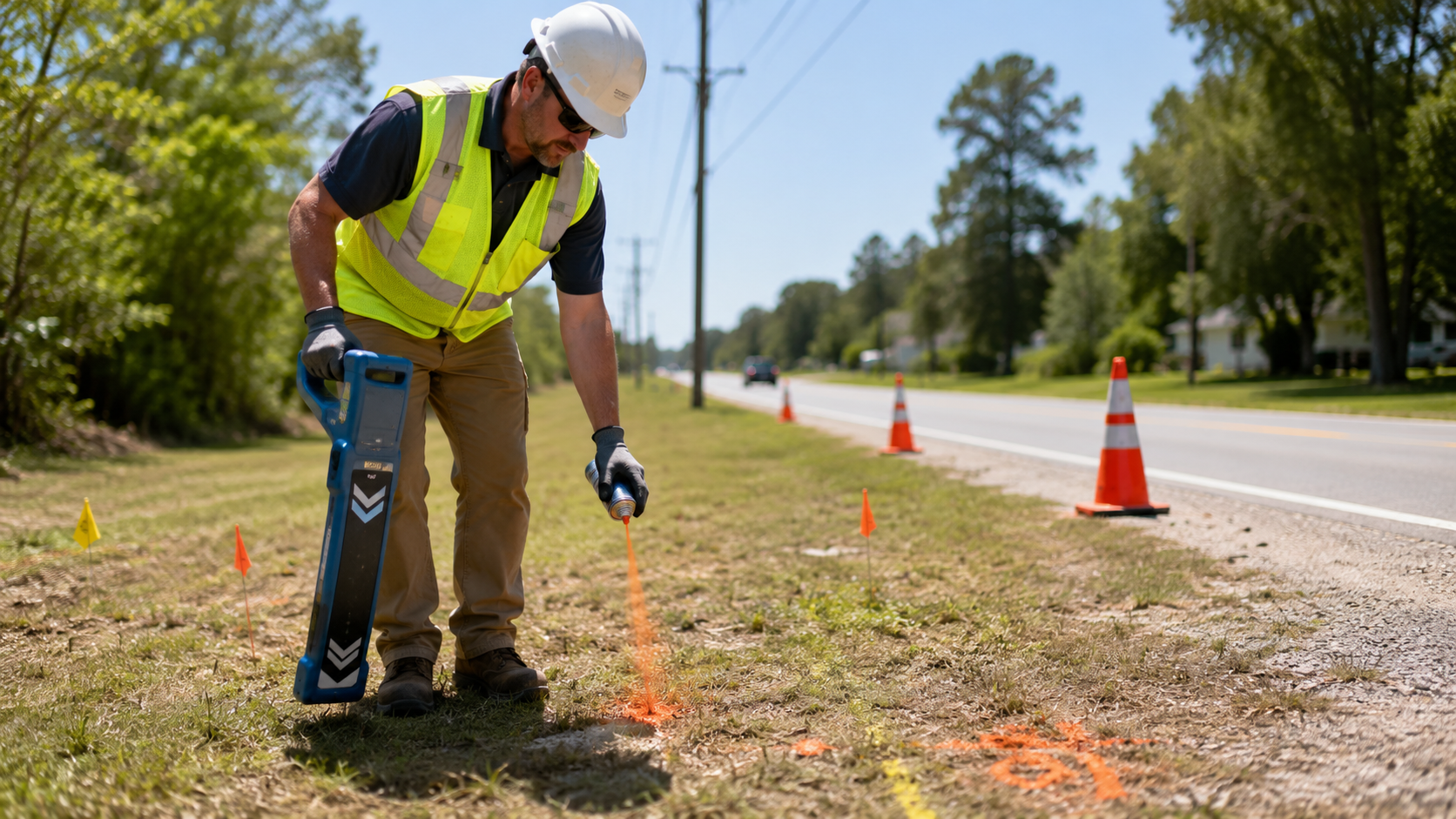
Underground installations are identified before excavation. Locate responses and field markings are reviewed, private facilities are discussed, and safe methods are used to verify exact locations as work approaches marked utilities.
A competent person evaluates soil, water, adjacent loads, utilities, protective systems, atmosphere, access, and changing conditions. Excavations are inspected before work, as needed during the shift, and after rain or other hazard-increasing events.
Sloping, benching, shoring, or shielding is used when required. Spoils and equipment are kept back from excavation edges, and safe access or egress is provided for trench work at required depths and travel distances.
Work areas are separated with signs, cones, barricades, lighting, high-visibility clothing, trained flaggers, spotters, and controlled equipment movement as the site and roadway conditions require.
Authorized workers complete pre-use checks, stabilize and position aerial equipment properly, maintain required clearances, use approved fall protection and tie-off practices, and follow equipment-specific operating and rescue procedures.
Energized circuits and overhead or underground power hazards are identified before work. Required approach distances, grounding, GFCI protection, inspected cords, qualified-worker controls, and energy-isolation practices are used as applicable.
Operators are qualified or authorized for the equipment used. Crews perform inspections, use guards and seat belts, maintain exclusion zones, control backing and swing-radius hazards, and remove damaged tools or equipment from service.
We use engineering and work-practice controls such as wet methods, dust collection, ventilation, restricted access, hearing protection, and respiratory protection when exposure assessments or the task require them.
Crews monitor weather and site conditions, provide water, rest, shade, acclimatization, and symptom awareness for heat, and pause or revise work for lightning, flooding, ice, high wind, poor visibility, or unstable ground.
Emergency contacts, first-aid resources, fire protection, spill response, access routes, and reporting procedures are established for the site. Work areas are kept orderly, trip hazards are controlled, and affected surfaces are cleaned and restored.
Daily field expectations
Standards & guidance
Kercom’s safety planning is designed around applicable OSHA construction standards, state-plan requirements, owner rules, equipment instructions, permits, and site-specific hazards.
This public overview is not an exhaustive safety manual and does not replace a site-specific hazard assessment, written safety plan, competent-person determination, permit, customer requirement, manufacturer instruction, or applicable law. Controls are selected and documented for each project and task.
Send Kercom your project location, scope, schedule, and construction requirements.